


Charles Porter Award
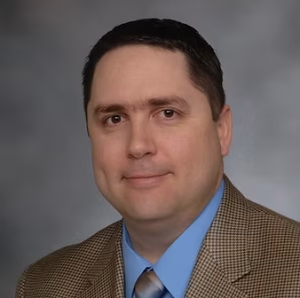
Ramon Gonzalez
MojiaBio
Dr. Ramon Gonzalez is the Chief Scientific Officer of MojiaBio (a global biomanufacturing company) and the President of the Society for Industrial Microbiology & Biotechnology (SIMB, founded in 1949). He is an elected Fellow of the American Association for the Advancement of Science (AAAS) and the American Institute for Medical and Biological Engineering (AIMBE).
Dr. Gonzalez's career has spanned the academic, private, and public sectors. Most of his academic work was conducted at Rice University, where he led the laboratory for Metabolic Engineering and Biomanufacturing and rose through the ranks from Assistant Professor to Full Professor. While at Rice, he was the founding director of the Advanced Biomanufacturing Initiative and served as Director of the Energy and Environment Initiative. More recently, Dr. Gonzalez was a Professor and Florida World Class Scholar in the Department of Chemical, Biological and Materials Engineering at the University of South Florida. In addition to his role as Editor-in-Chief of the Journal of Industrial Microbiology & Biotechnology (JIMB) from 2015 to 2023, he has served on the Editorial Boards of Science, Biotechnology Journal, Applied and Environmental Microbiology, Applied Biochemistry and Biotechnology, Food Biotechnology. Dr. Gonzalez also served as Program Director with the Advanced Research Projects Agency-Energy (ARPA-E) of the U.S. Department of Energy and with the U.S. National Science Foundation, as well as on the Board of Directors of SIMB.
Dr. Gonzalez has published over 100 papers in prestigious scientific journals, including Nature and its portfolio Journals (Nature Biotechnology, Nature Catalysis, Nature Metabolism, Nature Chemical Biology, Nature Communications), PNAS, and Science. He is the lead inventor in 25 patents/patent applications and founded/co-founded Glycos Biotechnologies, Creo Ingredients, RBN Bio, and C1Plus Bio. He has advised major industrial bio and Fortune 500 companies and is currently a member of the scientific advisory boards of several companies and research institutions. Dr. Gonzalez has received numerous recognitions, including, Discovery Series Lecture (BioDesign Institute, Arizona State University), Tiangong Forum Lecture (TIB-CAS, China), 'Inspiring Wisdom' Distinguished Lecture (SKMML, SJTU, China), AIChE Division 15c Plenary Lecture, ASM Distinguished Lecturer, SDA/NBB Glycerine Innovation Research Award, and NSF CAREER Award. Dr. Gonzalez obtained a Ph.D. in Chemical Engineering from the University of Chile, an M.S. in Biochemical Engineering from the Pontifical Catholic University of Valparaíso (Chile), and a B.S. in Chemical Engineering from the Central University "Marta Abreu" of Las Villas (Cuba)
Charles Thom Award
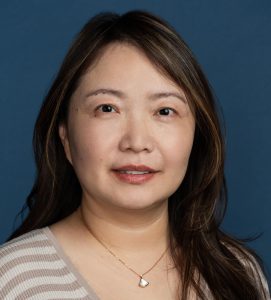
Wenjun Zhang
University of California, Berkeley
Wenjun Zhang, Ph.D., is the Charles R. Wilke Endowed Chair and Professor in the Departments of Chemical and Biomolecular Engineering and Chemistry at the University of California, Berkeley. She earned her Ph.D. at UCLA under Yi Tang and completed postdoctoral training at Harvard Medical School with Christopher T. Walsh before joining UC Berkeley in 2011. The Zhang Lab operates at the interface of chemical biology and industrial microbiology, focusing on natural product discovery, biosynthesis, engineering, and functional study. Dr. Zhang has been recognized with many honors, including the Presidential Early Career Award for Scientists and Engineers (PECASE), the NIH Director’s New Innovator Award, the Sloan Research Fellowship, and the Pew Scholarship.
Early Career Award
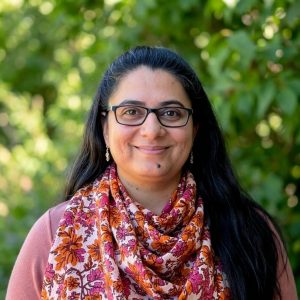
Nandita Kohli
Cargill
Dr. Nandita Kohli is a Senior Professional Biotechnologist in Core R&D at Cargill, where she leads strategic, innovation-driven programs at the intersection of industrial microbiology, synthetic biology, and biochemical engineering. She earned her Ph.D. in Chemical Engineering from Texas A&M University in 2017 and has since built a strong record of translating scientific innovation into scalable, commercially impactful technologies.
Dr. Kohli's research focuses on microbial fermentation, metabolic engineering, and enzyme-enabled processing to enable sustainable production of food ingredients and bio-based chemicals. She has led the development and commercialization of technologies across edible oil refining, lactic acid fermentation, and microbial manufacturing platforms, delivering measurable industrial impact, including multi-million-dollar improvements in process efficiency and product yields.
A key area of her impact is the development of automation and high-throughput (HTP) experimentation platforms, where she established advanced screening and strain characterization capabilities that dramatically increased throughput and accelerated discovery and scale-up. She has also driven cross-capability collaboration and serves as a technical leader shaping R&D strategy aligned with customer and consumer needs, ensuring innovation pipelines deliver relevant, market-driven solutions.
Dr. Kohli is a prolific innovator, with 27 patent applications globally, including technologies for sustainable production of molecules such as malonic acid and polyols, as well as novel solutions for plant-based foods, including bio-based pigment systems that address key sensory challenges.
In addition to her research excellence, Dr. Kohli is deeply committed to scientific leadership and community impact. She is an active contributor to SIMB as a session organizer, reviewer, and mentor. She also leads the STEM Day at the Minnesota State Fair initiative, engaging over 17,000 participants annually, and serves on the board of a nonprofit organization dedicated to expanding access to STEM education for underserved communities.
Dr. Kohli's interdisciplinary expertise, strong record of innovation, and dedication to mentorship and outreach exemplify the spirit of the SIMB Early Career Award and highlight her outstanding contributions to industrial microbiology and biotechnology.
SIMB Fellowship Status
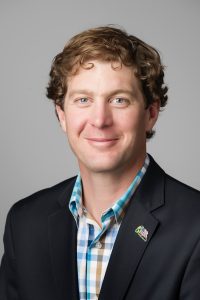
Michael Resch
National Laboratory of the Rockies
Michael Resch has been a proud member of SIMB since 2008. At his very first annual meeting — held at the height of the cellulosic ethanol era — he co-chaired the Symposium on Biotechnology for Fuels and Chemicals poster session. That early experience set the tone for a long record of service to the society, including roles as session convener, invited speaker, and member of both the Annual Meeting Biocatalysis Program Committee and the Membership Committee.
From 2017 to 2020, Michael served as a Director on the SIMB Board of Directors, where he worked to improve the conference experience for sponsors, organizers, and attendees. His contributions included modernizing the online registration system, launching a more user-friendly mobile program viewer, and standardizing meeting structures across annual and specialty meetings to improve consistency and accessibility.
Michael was elected SIMB President in 2022. His tenure has been defined by a commitment to keeping SIMB's meeting programs dynamic and inclusive — ensuring that session organizers have the flexibility to integrate emerging scientific topics and that young investigators have meaningful opportunities to lead sessions alongside established scientific pioneers. Financial stewardship of the society has remained a central priority, particularly in the face of declining post-pandemic attendance and shifting government research priorities that have created uncertainty across the industrial biotechnology field. Michael has championed SIMB's role as an enduring scientific home where international, academic, industrial, and government stakeholders can connect around cutting-edge industrial biotechnology.
Michael began his career at the National Renewable Energy Laboratory, where he focused on converting lignocellulosic feedstocks into biofuels. This year, NREL became the National Laboratory of the Rockies (NLR), where Michael leads the CO₂ Reduction and Upgrading for e-Fuels Consortium (CO2RUe), a U.S. Department of Energy-funded initiative that converts CO₂ into fuels and chemicals through electrochemistry and fermentation. His work aims to improve industrial carbon efficiency, create domestic energy products, and reduce U.S. dependency on imports. Michael also contributes to Business Development at NLR, driving industrial collaborations across technologies from bench to pilot scale.
SIMB Fellowship Status

Stephen Van Dien
Persephone Biosciences, Inc.
Stephen is the co-founder and Chief Technology Officer of Persephone Biosciences, a company developing novel therapeutics and consumer products based on the gut microbiome.
After receiving his Ph.D. in Chemical Engineering from the University of California, Berkeley, he spent most of his career in industrial biotechnology; notably 13 years at Genomatica leading the engineering of microbes to produce industrial chemicals, a sustainable alternative to petroleum-based production. He co-founded Persephone in 2017 along with CEO Stephanie Culler, to apply the same rigorous science to understanding metabolism in the gut and its implications toward human health.
Persephone's interests include colorectal cancer interception, the relationship between the microbiome and nutrition, and the infant microbiome. The Company recently developed and commercialized an infant probiotic.
Waksman Outstanding Teaching Award
Mark Blenner
University of Delaware
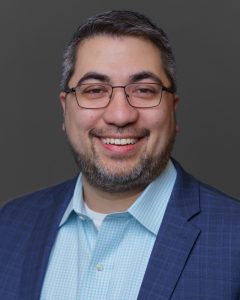
Dr. Blenner is the Thomas & Kipp Gutshall Career Development Professor of Chemical & Biomolecular Engineering at the University of Delaware and the Director of the NSF Center for Robust, Equitable, and Accessible Technology and Education (CREATE) for Next Generation BioFoundries. He received his PhD in Chemical Engineering from Columbia University in 2009 and completed three years of postdoctoral training as an American Heart Association Postdoctoral Fellow and an NIH NRSA Postdoctoral Fellow at Harvard Medical School and Children's Hospital Boston. He has won numerous awards including the 2026 Fellow of the American Institute for Medical and Biological Engineering, 2025 Langer Prize for Innovation and Entrepreneurial Excellence, 2022 AIChE Food, Pharmaceutical, and Bioengineering Division Early Career Award, the 2022 Biochemical Engineering Journal Young Investigator Award, the 2021 ACS BIOT Young Investigator Award, and the 2019 Presidential Early Career Award for Scientists and Engineers (PECASE). His research is broadly focused on engineering biomolecular and cellular systems for the production of fuels, chemicals, enzymes, biopharmaceuticals and biosensors. He is interested in accelerating the translation of synthetic biology to environments outside of the lab.
Diversity Student Travel Award
Kevaughn Prout
South Dakota State University
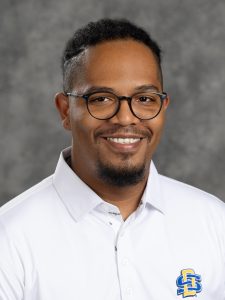
Kevaughn Prout is a 3rd-year graduate student in the Sustainable Bioproducts Lab at South Dakota State University (SDSU), where he is pursuing a PhD in Biological Sciences with a specialization in Microbiology. His research applies a range of techniques to optimize processes for producing high-value pigments from yeasts. A notable feature of Kevaughn's work is his use of regional feedstocks, such as Midwest beet molasses, as the carbon source for generating these bioproducts. Kevaughn earned an MSc in Biotechnology from Alcorn State University in MS and a BSc in Biotechnology from the University of the West Indies, Mona, in Kingston, Jamaica.
Diversity Student Travel Award
Emily Reagle
Yale University
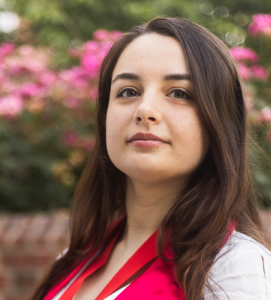
Emily Reagle began research on natural product protein therapeutics in Barry O’Keefe’s lab at the National Cancer Institute. She later earned B.S. degrees in biochemistry and microbiology (honors) from the University of Maryland, College Park. At UMD, she studied Group A Streptococcus virulence in Dr. Kevin McIver’s lab and continued that work after graduation as a laboratory technician. She is currently a microbiology graduate student in Dr. Jason Crawford’s lab at Yale University, where she studies natural products produced by host-associated bacteria and how those molecules affect host-bacterial interactions.